


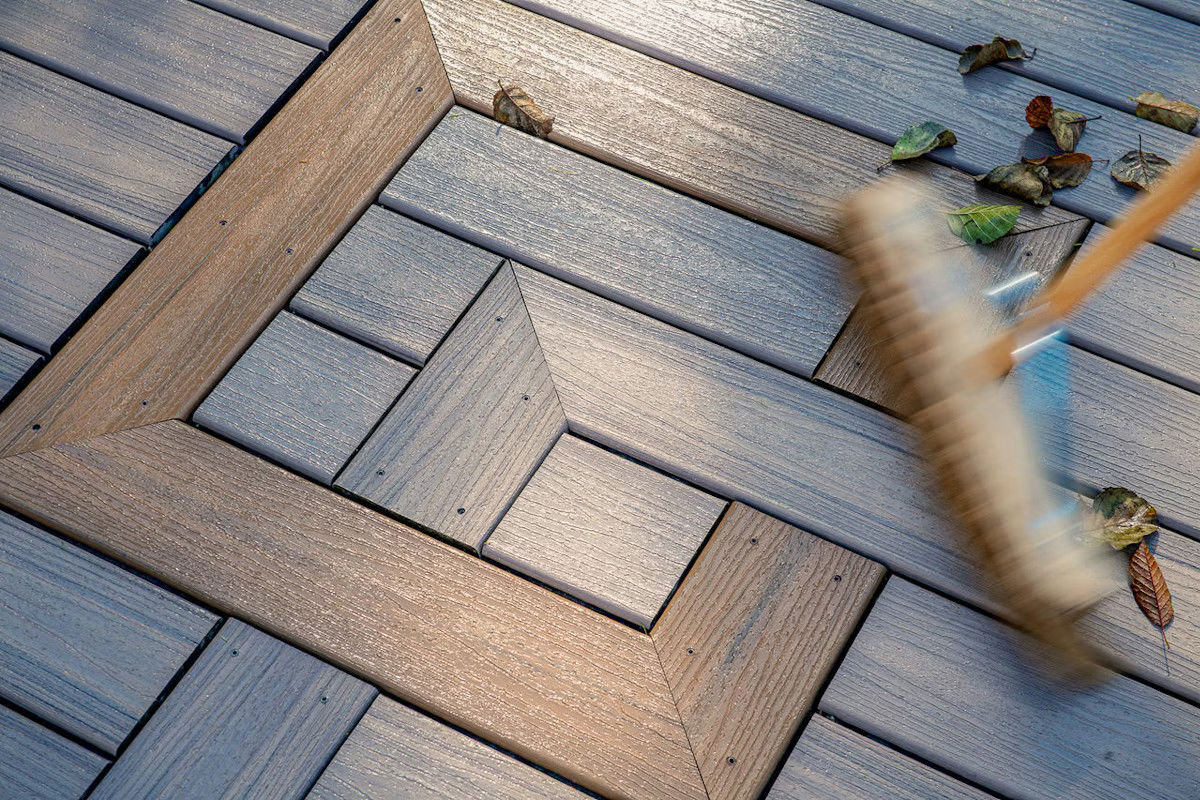


Designing and building a deck requires a significant investment in both time and money, so knowing the best way to clean decking is an important part of protecting that investment. The guide below outlines simple, effective steps for cleaning and maintaining both wood and composite decking so your favorite outdoor space will look its best season after season.
Why Cleaning Your Deck Is Important
Routine cleaning helps prevent fungi, algae and ground-in dirt from staining or damaging your deck surface over time. Both wood and composite decks benefit from seasonal maintenance, which not only improves appearance but also supports long-term durability and safety.

Cleaning Composite Decking
Composite materials are designed to be low maintenance, but routine cleaning is still essential. Dirt and organic debris can make the surface slippery, especially in shaded or damp areas. Regular washing also helps prevent vegetation or food from settling into and staining recesses in the cap layer. Additionally, keeping debris out of the gaps between boards promotes airflow and proper drainage, helping prevent moisture buildup and reducing the risk of mold and rot on the framing below. A couple of quick seasonal cleanings will preserve the look of your composite deck boards and help keep the walking surface safe year-round.
Natural Wood Lovers: Plan on More Regular Upkeep
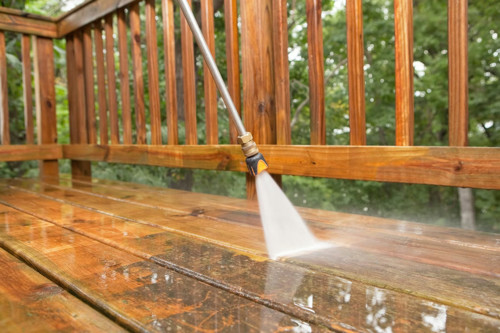
Wood decks need more frequent cleaning and maintenance because wood is porous and absorbs moisture. Depending on climate and sun exposure, many homeowners clean their decks several times a year to prevent staining, graying, warping and other moisture-related problems. Beyond cleaning, natural wood typically requires periodic sanding, staining or sealing to protect it from UV damage, rain and temperature fluctuations. Without that protection, boards may splinter, cup, or deteriorate prematurely.
Deck Cleaning Solutions & Tools Needed
Before you begin cleaning, make sure you have the right tools and a safe, effective cleaning solution. Some decking and wood stain manufacturers publish a list of approved cleaners to prevent damage or warranty issues, so it’s always worth checking their recommendations first. Here’s what you’ll need for a typical deck-cleaning session.
- Broom or Leaf blower to remove any debris
- Plastic putty knife to remove debris stuck in the cracks
- Scrub brush with soft bristles to scrub the surface
- Garden hose for presoaking and rinsing
- Mild deck cleaning solution that is not harmful to plants, grass, pets or children
- Bucket to hold the cleaning solution
How to Clean a Deck
While the steps below walk you through a safe, effective cleaning routine that works for virtually any type of decking, it’s always a good idea to check with the manufacture of your decking materials for product-specific instruction on how to clean composite decking.
Step 1: Sweep the deck surface
Use a broom or leaf blower to remove loose leaves, dirt, and surface debris. Clearing the deck makes the cleaning solution more effective.
Step 2: Clean debris from between deck boards
Use a plastic putty knife to remove packed debris from cracks and gaps. Take care not to damage any joist flashing tape that may be protecting the tops of the joists.
Step 3: Pre-rinse the deck
Spray the entire surface with a garden hose to remove ground-in dirt, help the cleaning solution spread evenly and to help loosen more stubborn stains.
Step 4: Mix the cleaning solution
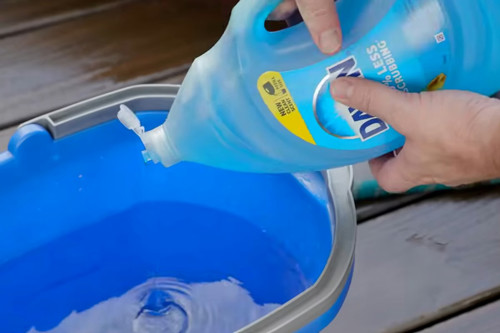
Combine warm water with a small amount of dish soap in a bucket. If you’re using a store-bought deck cleaner, follow the manufacturer’s instructions for proper dilution. Never use ammonia or bleach or other harsh chemicals which can damage wood and composite decking and harm plants, pets or kids.
Step 5: Scrub the deck surface
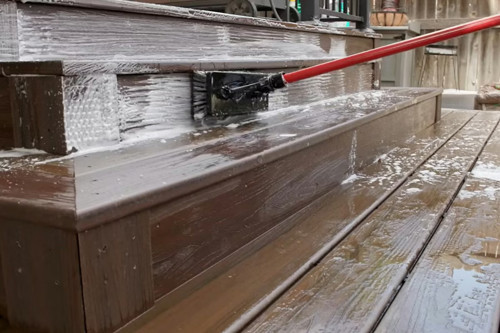
Use a soft-bristle brush and warm, soapy water to scrub the boards. Always scrub with the grain when working on a wood deck.
Step 6: Rinse thoroughly
Rinse the entire deck surface with a garden hose. Any cleaner left behind can actually attract dirt and make the deck look dirty again more quickly. On larger decks, work in small sections so the solution doesn’t dry before you can rinse it off.
Step 7: Treat stubborn stains
Apply additional cleaning solution to stained areas and scrub again as needed. Use a pressure washer only on extremely tough stains, and with caution because excessive pressure can damage wood and might void some composite decking warranties. Check out this article about how to properly use a pressure washer to clean your deck.
Removing Mold & Mildew from Your Decking
Mold and mildew require organic material to survive. Removing the soil and vegetation from your composite decking with a soft brush and mild cleaning solution is usually enough to remove mold and mildew and prevent them from reforming. Since wood itself is an organic material, keeping mold and mildew at bay is more difficult. The most effective but safe cleaning chemicals to use will depend on the type of finish you sealed your deck boards and railing with. Consult the manufacture of the sealant you used for specific cleaning instructions about how to clean mold off a deck.


