


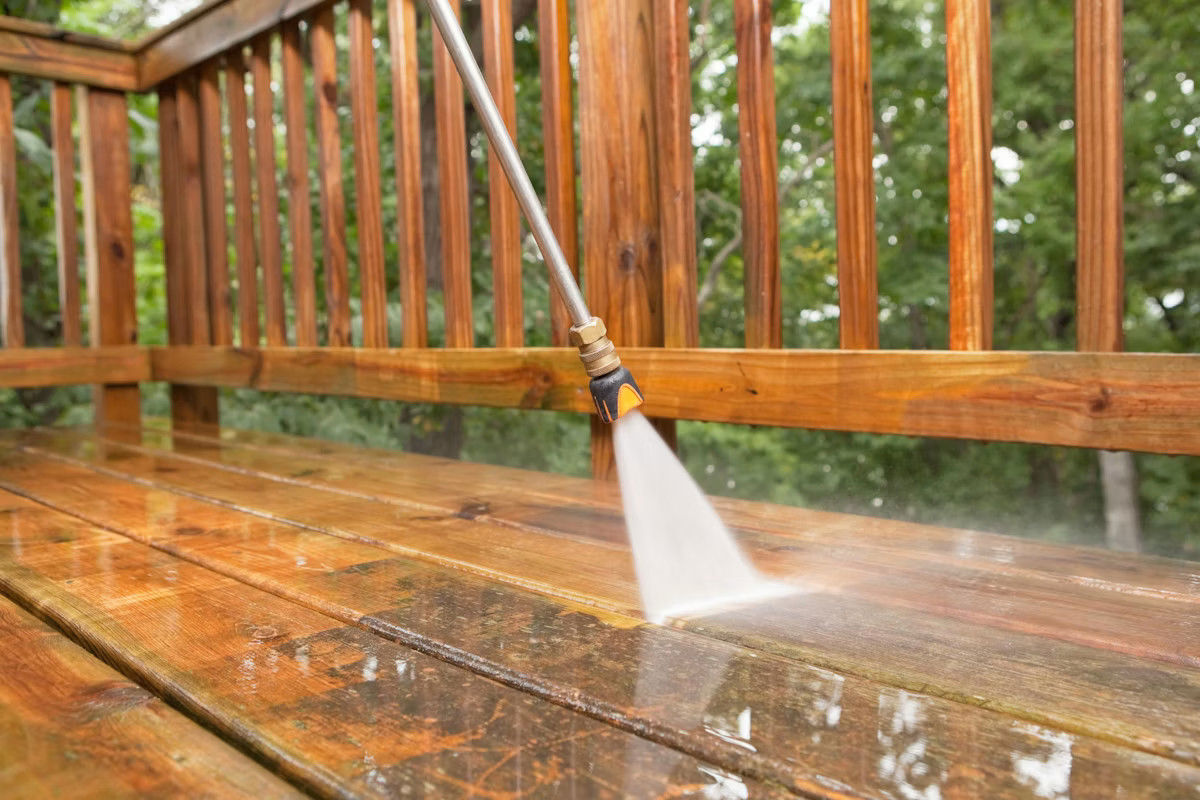


Pressure washing is one of the fastest ways of washing a deck, but using the wrong settings or technique can do more harm than good. This guide covers how to safely and effectively pressure wash wood and composite decking, including the right tools, settings, and step-by-step techniques to get professional results without damaging surfaces.
Why Washing Your Deck Matters
Routine pressure washing will keep your deck free of dirt buildup, dislodge leaves and other debris stuck between boards, and help to maintain the beauty and safety of your deck. Not only can leaves and other debris pose slipping hazards as they decompose, but they can also trap moisture that causes staining and promotes rot, which could require you to replace the deck boards sooner than expected.
How Often Should I Wash My Deck?
Ideally, you should pressure wash your deck at least once a year to remove algae and mildew and help prevent conditions that can damage the surface. Because you will be removing everything from the deck during the process, it’s also a good opportunity to inspect the bottoms of planters, chairs, and other furniture to ensure they aren't scratching or staining the deck boards.
If you have a wood deck, plan to pressure wash it before applying any stain or sealer. This helps the new finish adhere properly and improves long-term protection against the elements. For more information, read this article about How to Remove Paint and Stain from a Deck.
Hand Washing vs. Pressure Washing Your Deck: How They Differ
Counterintuitively, a pressure washer is often most useful when the whole deck is relatively clean, as the added pressure compared to a standard garden hose can remove light dirt without the need for a scrub brush. On dirtier decks, you’ll still need to scrub stubborn stains, in which case a garden hose is all that’s needed to rinse afterward. However, most decks aren’t uniformly dirty. In those cases, a pressure washer can save time by cleaning lightly soiled areas more quickly, but a scrub brush will still be needed for more heavily stained areas.
It’s important to note that composite decking from premium manufacturers like Trex is designed to be low maintenance and does not typically require pressure washing. In most cases, it can be effectively cleaned with soapy water and a standard garden hose.
Using a high-powered pressure washer can damage the surface and may void the warranty on many composite decking products. Always check the manufacturer’s cleaning recommendations before using a pressure washer. More on how to avoid damaging your deck below.
What Kind of Pressure Washer Do I Need and How Much Do They Cost?
Pressure washers are powered in one of three ways: electric (plug-in), gas, or battery. Gas-powered models are the most powerful, while electric models are the most affordable. Battery-operated washers may seem convenient, but they can be underpowered, and since most pressure washers still require a connection to a garden hose, the freedom from gas or an electrical cord isn’t always an advantage.
The average cost to rent a pressure washer is about $65–$80 per day. However, you can buy an electric pressure washer that produces about 1600 PSI (pounds per square inch) for as little as $100. Gas-powered models that produce 3000+ PSI start at approximately $350.
Beyond cost and power, consider what features are important to you. Most machines are sold with a standard variety of tips, but here are some other options to consider:
Soap reservoir: Allows you to apply soapy water directly through the pressure washer’s wand.
Self-drawing capability: Some models can draw water from a bucket, pool, or lake, making them ideal for remote tasks like cleaning docks.
Self-lubricating pumps: These allow the pressure washer to use hot water for extra cleaning power. Most residential pressure washer pumps are cooled by tap water and can be damaged if used with hot water.
Specialized accessories: Rotating surface cleaners and wand extensions can help make deck cleaning easier.
Pressure Washing Settings and Techniques
Getting good results without damaging your deck comes down to using the right settings and techniques. These key considerations will help you clean effectively while protecting the surface and surrounding materials, as well as people, pets, and plants.
How Many PSI Do I Need to Pressure Wash a Deck?
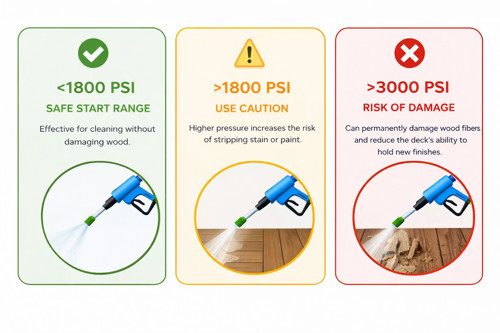
Choosing the right power washer pressure for a deck is critical to avoid damaging the surface. When pressure washing a wood deck, always start at a lower pressure, around 1800 PSI, and gradually increase it until the water is effectively cleaning the surface. Exceeding 2500 PSI increases the risk of stripping paint or stain from the wood. Even if your goal is to remove old finishes, using pressure above 3000 PSI can permanently damage the wood fibers, making it harder for the surface to hold new finishes.
Choosing the Right Pressure Washer Nozzle
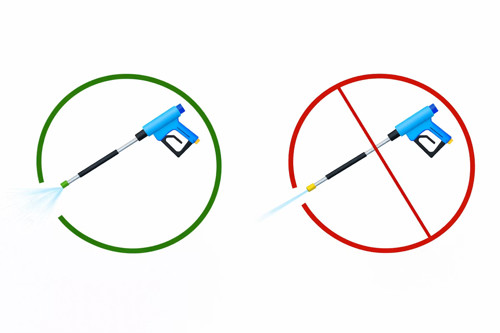
PSI is only part of the equation. The spray tip or nozzle you use also affects the force applied to the deck. A narrower spray pattern concentrates the water’s force, while a wider pattern disperses it over a larger area. Use a 25-degree (green) spray tip that generates a moderately broad spray pattern. Avoid using a 15-degree (yellow) or 0-degree (red) tip, as the concentrated spray can quickly damage decking by gouging wood fibers or leaving visible marks on the surface, especially on softer woods like cedar and redwood.
Best Distance to Hold the Nozzle from the Deck Boards
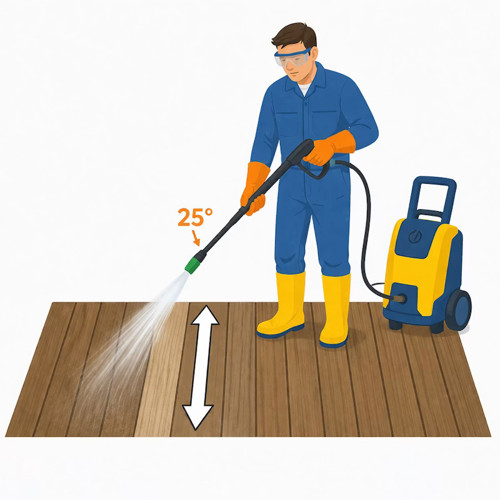
Start by holding the tip about 18 inches away from the surface, then slowly move it closer until you find the sweet spot. Holding the nozzle just a few inches from the wood, even with lower PSI and a wider tip, can still cause damage.
Wand movement is just as important. Keeping the spray in one spot for too long can gouge the wood fibers, so always keep the wand moving in a steady back-and-forth motion to avoid damage.
What Deck Cleaner Should I Use in My Power Washer?
Cleaners come in a variety of formulations with different performance claims. Some are detergents, others are bleaches, and still others are chemical solutions designed to react with certain wood types. There is no single best answer as to which cleaner you should use.
Always start by checking the decking manufacturer’s recommendations, as some products can damage certain materials or void warranties. When choosing a cleaner, look for one that is safe for people, pets, and plants, and ensure it will not damage nearby surfaces such as painted siding, trim, or doors that may be exposed to overspray or runoff. Always wear appropriate personal protective equipment, including gloves and eye protection, when handling cleaning chemicals.
How to Power Wash a Deck: Step by Step
A methodical approach to power washing a deck will help you clean effectively without damaging surfaces. Follow the steps below to preserve the integrity of your decking and railing components, and always wear eye protection and gloves before spraying chemicals.
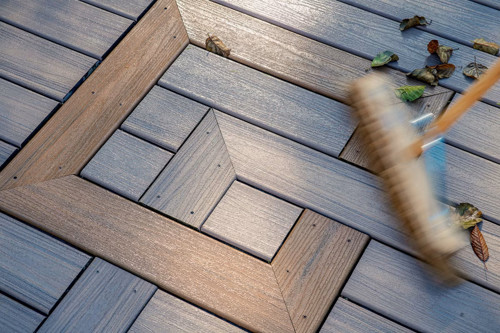
Step 1: Remove Loose Dirt and Debris
Start by clearing everything off the deck, including furniture, planters, and accessories. Sweep the surface thoroughly with a broom or use a leaf blower to remove loose dirt, leaves, and debris from the top of the boards and between the gaps. This step prevents debris from turning into mud once water is introduced and allows the cleaner to work directly on the surface.
Step 2: Give It a Light Wash
Before applying any cleaner, rinse the deck with a garden hose or pressure washer using a wide fan tip. This initial rinse removes surface-level dirt and helps saturate the wood, allowing the cleaner to spread more evenly and penetrate better. Work in the direction of the wood grain on wooden boards and railings.
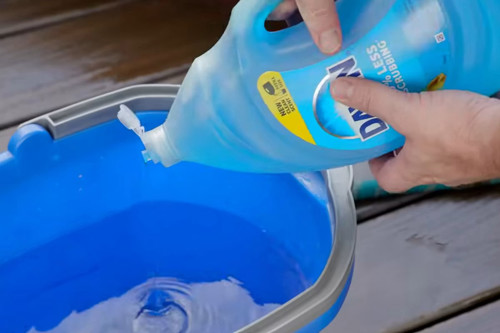
Step 3: Apply the Cleaner
Apply your chosen deck cleaner according to the manufacturer’s instructions. Use a pump sprayer or a pressure washer with a soap nozzle if appropriate. Allow the cleaner to dwell long enough to break down dirt, algae, and stains, but do not let it dry on the surface. In warm or sunny conditions, you may need to lightly mist the deck to keep it damp during this process.
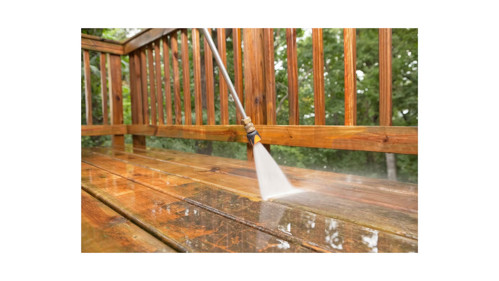
Step 4: Pressure Wash the Deck
Before pulling the trigger, make sure the wand is pointed away from the deck and anything it could damage. Use a 25-degree tip and bring the spray to the surface gradually.
Clean using long, consistent strokes with the grain of the wood, maintaining a steady distance to avoid lap marks or gouging. Keep the wand moving at all times and overlap each pass slightly for even results.
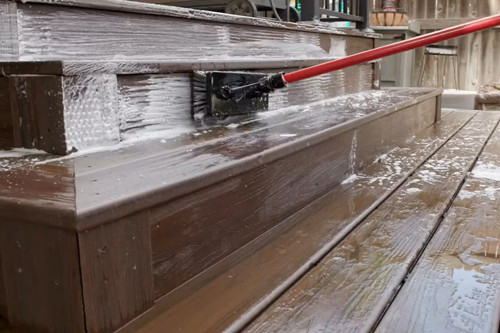
Step 5: Hand Scrub Stubborn Areas (if necessary)
Extremely dirty decks will require some scrubbing, especially in high-traffic areas or where mildew has formed. Add more cleaner and use a stiff, synthetic-bristle brush to scrub those stained areas. Keep the deck damp so the solution does not dry out.
Step 6: Final Rinse
Rinse the entire deck thoroughly to remove all cleaner residue. Leftover soap can affect the appearance and interfere with future finishes. You may need to repeat steps 5 and 6 to remove stubborn stains.
Common Mistakes to Avoid When Pressure Washing Your Deck
Skipping PPE: Always wear proper personal protective equipment, including eye protection and gloves, to avoid injury from debris and chemicals.
Using too much pressure, using the wrong tip, spraying too close, hitting one spot too long, or ignoring the grain: Any one of these can permanently damage the surfaces of your deck.
Using the wrong cleaner: Some cleaners can damage finishes or harm people, pets, and plants if not chosen carefully.
Not removing all the cleaner: Residual cleaner can discolor the deck and interfere with future stains or sealers.
Overheating the pressure washer: Running hot water or letting the unit sit idle while running can damage the machine.
Improper winter storage: Allowing the water to freeze inside the pressure washer will likely damage the machine.
Ignoring electrical hazards: Be cautious around outlets and fixtures, even if they are protected with a GFCI (ground fault circuit interrupter), to avoid electrical risks.
More Deck Care Resources
Get more tips for caring for your deck:


