


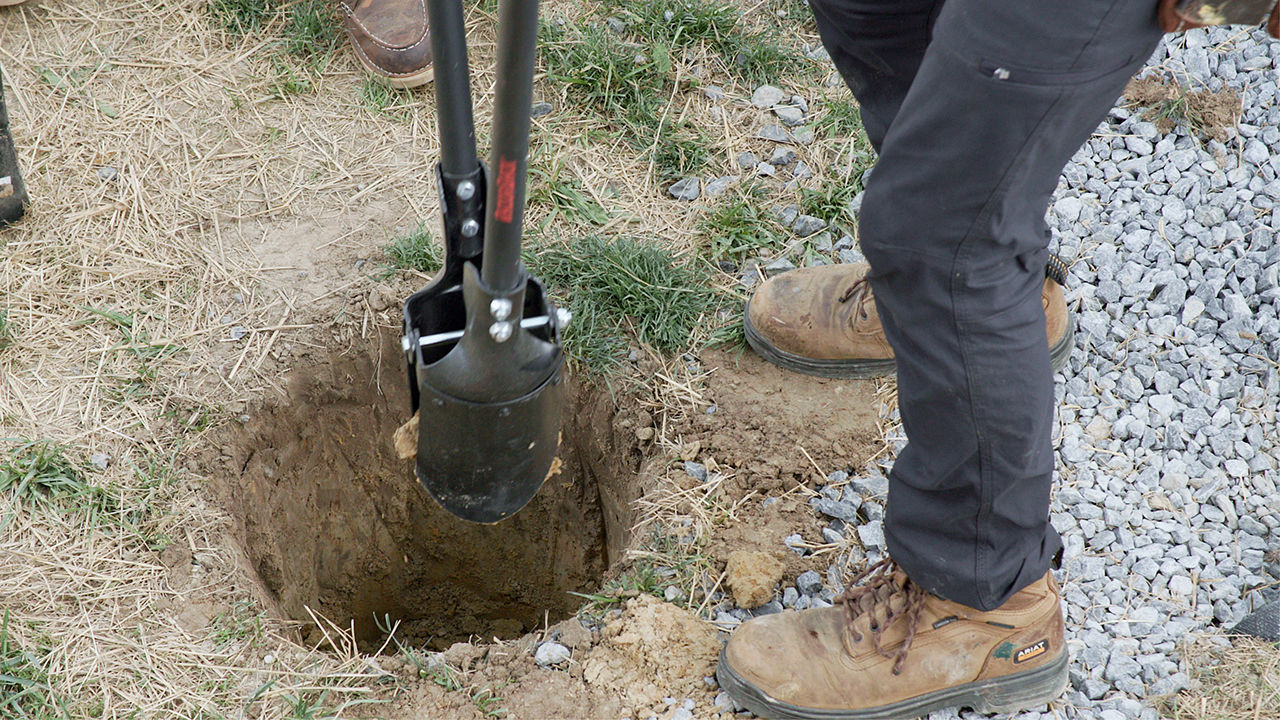


Deck Footing Depth Guide
A strong, safe deck begins with properly installed footings. In this guide, we’ll explain how deep your deck footings need to be based on where you live, why frost lines matter, and what other footing considerations you should keep in mind before you start digging. You’ll also find a helpful frost line map based on U.S. climate zones, so you can plan your build with confidence.
What are Deck Footings and Why Do You Need Them?
Without the proper support, your deck could sink into the ground. Deck footings help prevent that. Compared to deck posts, deck footings have a wider profile which helps support the weight of the deck. They support your deck the way wide snowshoes help support a person walking on top of deep snow.
But preventing your deck from sinking is only half the equation. You also need to protect your deck from being pushed up higher from pressures caused by freeze/thaw cycles. The soil in the ground expands as it freezes. This soil expansion can push your footings upwards. Sometimes, the footings will sink back down when the soil thaws, but not always. And even if your footings return to their original position after being raised by the frozen soil, that up and down movement will compromise the deck ledger connection and could cause it to fail, possibly after just one freeze/thaw cycle. Compromised ledger board connections are one of the most common causes of deck failures. To ensure your deck footings stay put, they need to be buried deep enough so they won’t be affected by frozen, expanding soil.
How Deep Do Your Footings Need to Be?
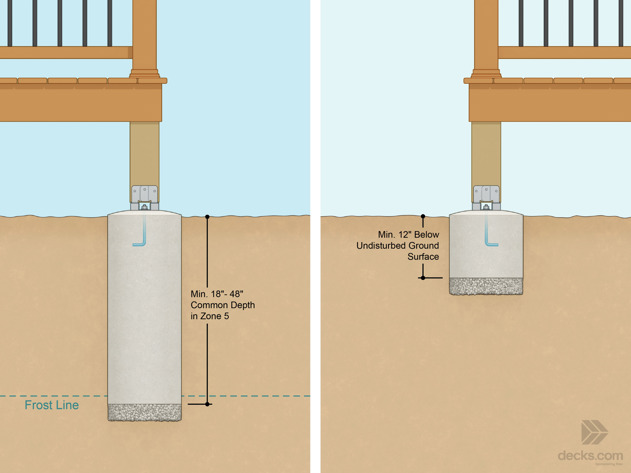
The frost line is the key factor in determining how deep your footings need to be. The frostline marks the maximum depth at which moisture in the soil is expected to freeze. Footings must be placed near or below this depth to prevent them from being lifted by expanding, frozen soil during the freeze/thaw cycle.
Even in areas where the ground doesn't freeze, footings are typically required to be buried at least 12 inches deep. This helps prevent lateral movement over time, especially on sloped terrain. Note that this 12-inch depth must be measured from undisturbed soil—if you've raised the grade in an area where the footing will be located, you'll need to dig 12 inches below the original ground level.
Frost does not affect bedrock. So, for homes located where the bedrock is near the surface, usually the footings can rest right on the bedrock.
What Affects the Frost line?
Frost line depth varies significantly across North America. Even areas with similar seasonal temperatures can have vastly different footing depth requirements. Several factors influence how deep a footing needs to be buried, including:
- Climate: The most obvious factor—the colder the winters the deeper the frostline is driven down.
- Moisture: The more moisture in the soil the more it will expand. The more soil expands, the greater it’s potential for heaving footings upward.
- Soil Type: Certain types of soil, like heavy clays, can hold more moisture than sand or gravel soils.
Steep Slopes: Ground near a steep slope or a retaining wall lacks lateral soil insulation, so it is exposed to cold air above and from the side, allowing the frost line to reach greater depths
Frostline Map
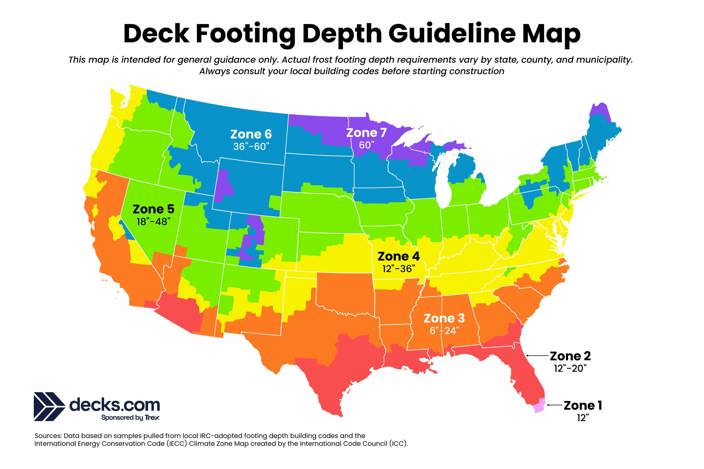
- Zone 1: 12 inches: Frost is negligible in Zone 1 regions. Parts of southern Florida, Hawaii, Guam, etc. have essentially no frost line, so only the minimum footing depth (12”) is typically required for stability.
- Zone 2: 12 to 20 inches: Light-frost areas. Most warm coastal and southern Zone 2 locations see frost penetration well under 20 inches at most, often just requiring minimum 12-inch footings.
- Zone 3: 6 to 24 inches: Moderate-frost climates. In much of Georgia, Alabama or Arkansas, deck footings usually need to be 24 inches deep. However, some drier Zone 3 locales like Dallas, TX only require a 12-inch footing depth.
- Zone 4: 12 to 36 inches: Mixed climates. In milder Zone 4 areas (marine or southern sub-zones), the frost line can be less than 12 in. Colder Zone 4 regions (mid Atlantic/Central US) commonly range from 30- to 36-nch frost depths.
- Zone 5: 18 to 48 inches: Cool-temperate zone. Frost depth generally varies from around 18 inches in milder interiors up to about 48 inches in colder Zone 5 areas, according to state code data.
- Zone 6: 36 to 60 inches: Cold climate zone. Many Zone 6 locales have frost lines on the order of 3 to 5 feet deep. For instance, northeastern states often require 48- to 60-inch deep footings, and even midwestern Zone 6 states are typically in the 36- to 48-inch range.
- Zone 7: 60 to 96 inches: Very cold zone. Northernmost continental U.S. areas including northern Minnesota, North Dakota, Maine, and southern Alaska commonly mandate 60-inch-deep footings. In extreme cases, frost can penetrate more up to 8 feet (96″) in winter, which is an outlier depth for Zone 7 regions.
- Zone 8: 60 to 120 inches: Subarctic zone. Parts of interior Alaska experience exceptionally deep frost, on the order of 8 to10 feet in severe winters.
Sources: Data based on samples pulled from local IRC-adopted footing depth building codes and the International Energy Conservation Code (IECC) Climate Zone Map created by the International Code Council (ICC).
Other Footing Considerations: Size, Shape, Position & Post Connections
Footings can be created in any number of shapes and configurations. The items below just apply to concrete pier footings that are flush or slightly above the grade. Need another article about this
- Size: Footing size depends on the weight your deck is designed to support. See this article for more information on calculating footing size.
- Post Connection: The deck posts need to be securely anchored to the footing. See this article on how to anchor deck posts to footings.
- Flat Bottom: Footings should have a flat bottom. Footings that are cone shaped or pointed on the bottom can more easily be driven down into the soil by the weight of the deck.
- Tapered Top: A tapered top eliminates water from pooling which could extend the life of the footing and post.
- Plumb: Footings should be installed as plumb (straight up and down) as possible. The weight of the deck can cause a slanted footing to shift over time.
- Smooth Edges: Expanding soil can grab hold of the sides of rough or jagged footings and lift them up during the freeze/thaw cycle. Using smooth concrete tube forms can help eliminate this.
- Safety: Remember to always call 811 before you dig the holes for your footings.
When Don’t You Need Deck Footings
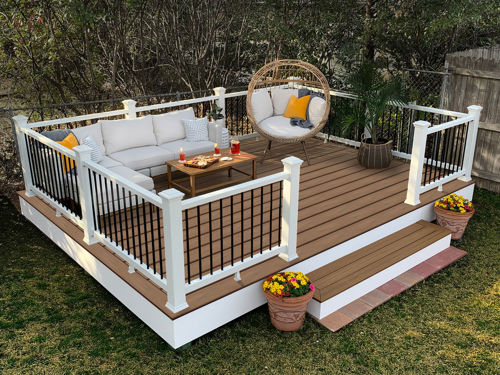
Every deck post should be supported by some stable structure beneath it, but not every deck needs footings buried deep in the ground. According to the *2021 International Residential Code (IRC), here are a couple scenarios where decks don’t need footings or can be supported by surface structures like plastic pads or concrete blocks:
1.Footings shall not be required for free-standing decks consisting of joists directly supported on grade over their entire length.
2.Footings shall not be required for free-standing decks that meet all of the following criteria:
2.1. The joists bear directly on precast concrete pier blocks at grade without support by beams or posts.
2.2. The area of the deck does not exceed 200 square feet (18.6 m2).
2.3. The walking surface is not more than 20 inches (508 mm) above grade at any point within 36 inches (914 mm) measured horizontally from the edge.
*Building codes can vary from one municipality to another. Always consult your local building codes.
Learn more
Ready to upgrade your outdoor space? Click here to learn more about the durability, beauty, and low-maintenance benefits of Trex® composite decking—a smart alternative to traditional wood. Want to complete the look? Discover Trex railing options and find the perfect style and color to match your vision, whether you're aiming for sleek and modern or classic and timeless. Need help bringing it all to life? Find a local TrexPro® contractor who’s been certified to install Trex products with skill and precision. Or check out these articles and videos below to learn more about how to build your dream deck.


